


Blog
The FID Gap: Why Oil and Gas Decarbonisation Projects Stall Before Final Investment Decision
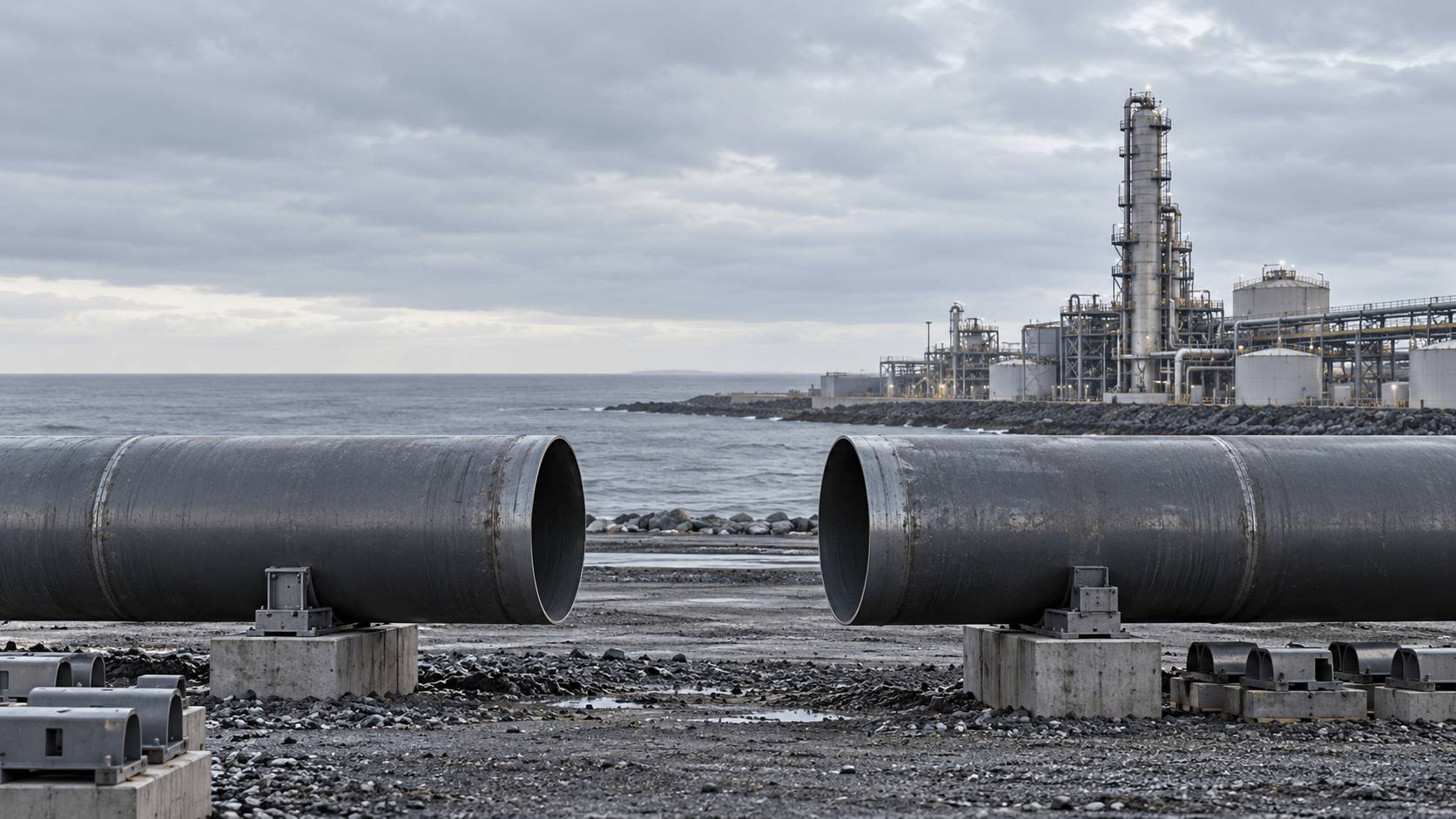
Oil and gas decarbonisation projects in Europe often stall before FID because lenders cannot quantify their revenue risk. The EU carbon price after 2030 is still under negotiation, and few hydrogen buyers sign firm offtake contracts, while permits move slower than CAPEX cycles. The CCS projects that reached FID in 2024 and 2025 show which instruments, from contracts for difference to state support, carried them there and which risks stayed with the sponsor.
Why CCS and hydrogen projects stall before FID
For most CCS, hydrogen and electrification projects in Europe, engineering is no longer the main open question. The IEA's Global Hydrogen Review 2026 lists high costs, uncertain demand, unclear or complex regulation and missing infrastructure as the barriers to low-emissions hydrogen. New FIDs in low-emissions hydrogen production fell below 0.8 Mt a year in 2025, after two years at around 1 Mt.
Marek Drywa, Senior Director Business Development at Worley, follows projects from concept to implementation. In an interview at DECARBON 2026 he commented that "a lot of times in European energy transition projects we see the business cases being quite undefined sometimes."
Worley is also joining DECARBON 2027 – get the full list of participants
The IEA estimates that 22 Mt of announced hydrogen production may lose any chance of operating by 2030 unless investors take FIDs by early 2027.
EU ETS reform and the carbon price after 2030
The Commission set the CBAM certificate price for Q2 2026, which equals the average EU ETS auction price for the quarter, at €75.28 per tonne of CO₂. As CBAM already shows, carbon cost is part of today's project economics. A project that reaches FID in 2027 earns most of its revenue after 2030, though, and lenders model that decade.
On 17 July 2026 the Commission proposed slowing the annual cap reduction to 3.7% for 2031-2035 and 1.7% for 2036-2040, and keeping free allocation after 2030 for operators that invest in decarbonisation. For 2026-2030, the Commission expects industry to receive free allowances for about 75% of its emissions. Free allowances lower the carbon cost a project avoids, and with it the savings in the model.
The Parliament and the Council can still amend the proposal, and the Council is examining the wider review. Until they agree, the carbon price in a 20-year cash flow rests on rules that may change.
Hydrogen offtake and CO₂ storage contracts lenders ask for first
In 2025, new offtake agreements for low-emissions hydrogen stayed at around 1.7 Mt, and only about 20% of the newly signed volumes carried firm contractual commitments.
At Northern Lights, the contract came first. Equinor, Shell and TotalEnergies took FID on the second phase, lifting capacity from 1.5 Mt to more than 5 Mt a year from 2028, after Stockholm Exergi signed a 15-year agreement to ship up to 900,000 tonnes of CO₂ a year.
At H2Teesside, demand moved the other way. When bp withdrew the application in December 2025, its letter cited a land-use conflict with a planned data centre and added that local hydrogen demand had deteriorated, as major industrial consumers had scaled back operations or postponed decarbonisation plans.
European Hydrogen Bank auctions: why awards have not become FIDs
In the European Hydrogen Bank's second auction, the Commission selected 15 renewable hydrogen projects requesting €992 million. By January 2026, after further projects were invited from the reserve list, six had signed grant agreements, for €270.6 million. Before signing, each project had to provide a completion guarantee, and several of the original winners withdrew or could not provide one. The subsidy covered part of the cost gap, and developers kept the demand and delivery risk.

Maria Karagiannidou-Rosiek, Head of Policy at the International Association of Oil & Gas Producers, pointed to the rules:
"There are regulatory restrictions; the regulation is too prescriptive, which really kind of prevents those projects to be fully developed or the FIDs to be taken. […] The European Commission and the European policy is very technology specific. So for example, if we talk about hydrogen, there is a preference for development of green hydrogen."
Maria Karagiannidou-Rosiek is going to be among the speakers at DECARBON 2027 – get the full business programme
The third auction drew 58 bids from 11 countries, requesting €8.4 billion against a €1.3 billion budget, and the Commission selected nine projects for €1.09 billion. It was the first to accept electrolytic hydrogen that does not meet the strict RFNBO criteria.
Chain risk in CCS: when your FID depends on another company
Tim Shire, Process Engineering and Strategy Manager, Major Decarbonisation Projects at EET Fuels, Stanlow Refinery, described the sequencing problem in an interview at DECARBON 2026:
"If you want to produce hydrogen, you're investing hundreds of millions of dollars, but you need a customer. If you're a customer, you're investing tens of millions of dollars, but you need a producer. And making those things fit together, choreographed together nicely is quite a challenge that requires cooperation with the government, different companies, lenders, etc."
Permits run on their own timetable. An appeal against the permits for the Aramis CO₂ transport project in the Netherlands went to the Council of State, and the partners warned that it could move FID to 2027. EBN now expects FID in 2027 and start-up in 2030. With government support, the partners say they can start with first customers before all capacity is booked.
Under the Net-Zero Industry Act, EU oil and gas producers above a production threshold must deliver 50 Mt a year of CO₂ injection capacity by 2030. Several obligated producers have challenged the Article 23 storage obligation before the EU courts, so its final scope may still change.
How contracts for difference, state support and consortia get projects to FID
Amu Arenja, Senior Project Manager at Shell Energy & Chemicals Park Rheinland, set out the test:
"You have to have a good economic case to get that decarbonisation done."
The projects that reached FID moved specific risks off the sponsor's balance sheet. Net Zero Teesside Power, due to start up in 2028, will operate under a Dispatchable Power Agreement built on standard CfD terms, and the UK has committed up to £21.7 billion over 25 years to the Teesside and Merseyside clusters. Its CO₂ goes to the Northern Endurance Partnership, a joint venture of bp (45%), Equinor (45%) and TotalEnergies (10%) that reached financial close in December 2024.
Germany's 2026 round of carbon contracts for difference offers up to €5 billion over 15 years and admits CCS and CCU for process emissions for the first time. It drew 21 bids, and the ministry reports that requested funding exceeds the budget. At EU level, the Commission has proposed a €100 billion Industrial Decarbonisation Bank. Its first phase, an Investment Booster worth an estimated €30 billion, would open in 2028 and pay fixed carbon premia on a first-come, first-served basis.

DECARBON 2027: discussing CCS and hydrogen investment with peers in Berlin
DECARBON 2027 takes place in Berlin on 15-16 February 2027 as a closed-door networking event for oil and gas decarbonisation. It brings together upstream, midstream and downstream operators, EPC contractors and technology providers in CCUS, hydrogen and energy efficiency: the parties whose decisions have to line up before a project reaches FID.
Two sessions take up the questions in this article:
-
Roundtable 2, "Global CCS projects: delivering commercial-scale decarbonisation for oil and gas", brings together speakers from Aker BP, Snam, Shell and others.
-
In Session 4, "CCUS: transforming emissions from a climate liability into economic opportunities", among the confirmed speakers are experts from EBN B.V., Equinor and others.
The wider programme covers decarbonisation from upstream to downstream, methane monitoring, low-carbon hydrogen, energy efficiency, regulation and collaboration on net zero. Every participant receives the attendee list, chooses priority contacts and arranges meetings on site, while a personal manager supports them from registration until after the congress.
Oliver Altenhoff, Head of Regulatory Affairs at OGE, explained what he takes from the congress:
"I get insights into real concrete projects. Where are we really? What are we doing? And that is most interesting for me."
FAQ
What is DECARBON 2027?
DECARBON 2027 is the Oil & Gas Decarbonisation Congress, a closed-door B2B event for the oil and gas value chain. It brings together C-level executives, sustainability leads and technical decision-makers from operators, upstream producers, midstream companies and refiners, alongside EPC contractors and technology providers.
How is a closed-door congress different from an open industry exhibition?
Unlike an open exhibition, DECARBON 2027 admits only participants invited by the organiser, and anyone interested cannot simply buy a ticket. The organiser selects the audience from oil and gas professionals and industry leaders, so students and casual visitors do not attend. Every participant receives the attendee list before the event, chooses priority contacts and arranges meetings on site, supported by a personal manager from registration until after the congress.
When and where does DECARBON 2027 take place?
DECARBON 2027 takes place on 15-16 February 2027 in Berlin, Germany. Over two days, roundtables and sessions cover commercial-scale CCS projects, the economics of CCUS, energy efficiency and low-carbon hydrogen, alongside a technology exhibition and structured B2B meetings between operators, EPC contractors and technology providers.
How can a company take part in DECARBON 2027?
Companies take part in DECARBON 2027 as delegates, sponsors, exhibitors or speakers after applying to the organiser. Sponsors also receive a guaranteed number of B2B meetings, organised with the help of their personal manager. To discuss a participation format, companies contact the DECARBON 2027 team.
Why do CCS and hydrogen projects stall before final investment decision?
CCS and hydrogen projects usually stall before FID because lenders cannot quantify their revenue risk. The EU carbon price after 2030 depends on an ETS reform still under negotiation. Only about 20% of the low-emissions hydrogen offtake volumes signed in 2025 were firm commitments, and permits run on their own timetable. New FIDs in low-emissions hydrogen production fell below 0.8 Mt in 2025.
How do contracts for difference help decarbonisation projects reach FID?
Contracts for difference help projects reach FID by stabilising revenue against swings in market prices. The state pays the gap when prices fall below an agreed strike price, and the project pays back when prices rise above it. Germany's carbon contracts for difference hedge CO₂ and energy prices for 15 years, and Net Zero Teesside Power will operate under a CfD-based agreement. Permitting and offtake risk stay with the sponsor.
References
-
IEA – Global Hydrogen Review 2026 https://www.iea.org/reports/global-hydrogen-review-2026/executive-summary
-
European Commission – Price of CBAM certificates https://taxation-customs.ec.europa.eu/carbon-border-adjustment-mechanism/price-cbam-certificates_en
-
European Commission – Electrification Action Plan and ETS review https://ec.europa.eu/commission/presscorner/detail/en/ip_26_1596
-
European Commission – Updated EU ETS benchmarks for consultation https://malta.representation.ec.europa.eu/news/commission-presents-updated-eu-emissions-trading-system-benchmarks-consultation-2026-05-11_en
-
Equinor – Investing NOK 7.5 billion in expansion of the Northern Lights CCS project https://www.equinor.com/news/20250327-northern-lights-phase-2
-
IOM3 – BP hydrogen and carbon capture project withdrawn in Teesside https://www.iom3.org/resource/bp-hydrogen-and-carbon-capture-project-withdrawn.html
-
European Commission – IF24 Auction https://climate.ec.europa.eu/areas-action/eu-funding-climate-action/innovation-fund/calls-proposals/if24-auction_en
-
European Commission – EU awards over €1 billion to European hydrogen projects https://ec.europa.eu/commission/presscorner/detail/en/ip_26_1004
-
Aramis – Appeal against permits for Aramis initiative https://www.aramis-ccs.com/news/appeal-against-permits-for-aramis-initiative/
-
UK Government – Government reignites industrial heartlands https://www.gov.uk/government/news/government-reignites-industrial-heartlands-10-days-out-from-the-international-investment-summit
-
German Federal Ministry for Economic Affairs and Energy – CO2-Differenzverträge treffen auf breites Interesse in der Industrie https://www.bundeswirtschaftsministerium.de/Redaktion/DE/Pressemitteilungen/2026/09/20260918-co2-differenzbetraege-industrieinteresse.html