


Blog
From Regulation to Purchase Order: How EU Decarbonisation Rules Create Demand for Oil and Gas Suppliers
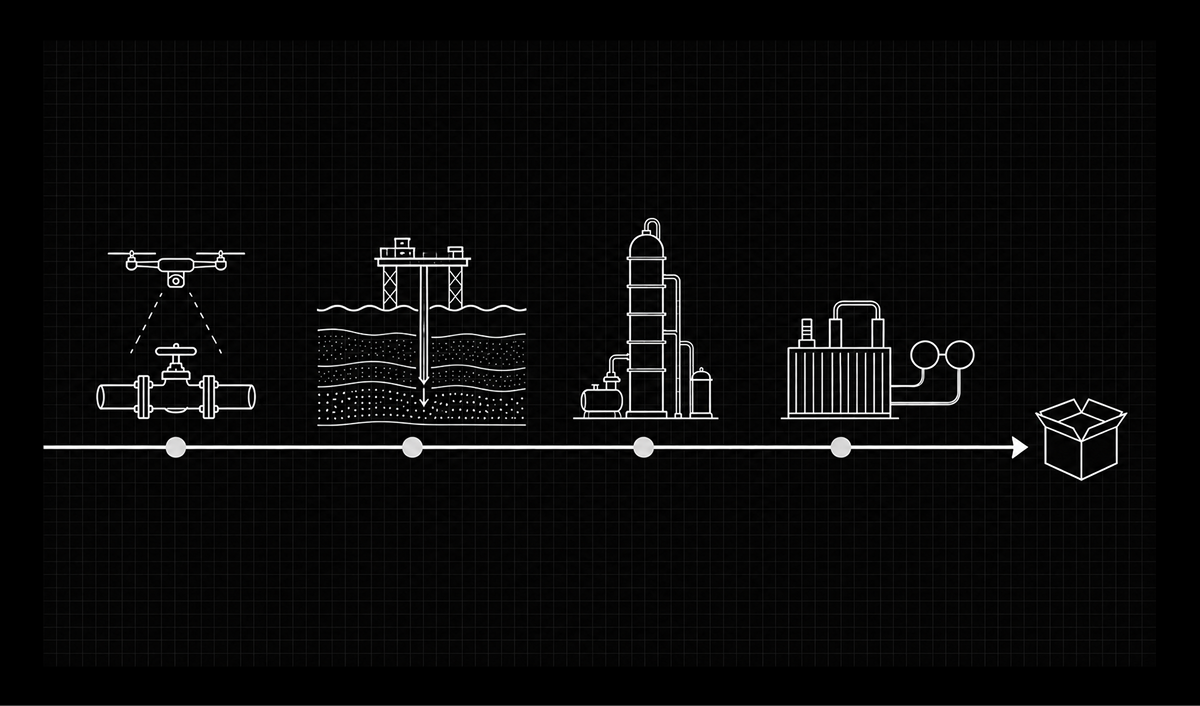
EU decarbonisation rules set the timing for what oil and gas operators in Europe procure: demand starts when a rule fixes a date, a quota or a penalty. Three rules in force and one proposal set that timing now: the EU Methane Regulation, the CO2 storage obligation in the Net-Zero Industry Act, Germany’s RFNBO quota and the proposed EU ETS review. For each one, this map shows what operators must do, what they need from suppliers and who signs off.
EU Methane Regulation: site-level measurement by 2027 and ongoing LDAR
The EU Methane Regulation sets 5 February 2027 as the deadline for operators of EU oil and gas assets to back their emissions reports with site-level measurements. An accredited verifier has to check those reports before they go to the authorities. The regulation describes site-level measurement as sensors on a vehicle, drone, aircraft, boat or satellite, or networks of fixed sensors. That gives suppliers a fixed date to plan around.
Leak detection and repair (LDAR) adds recurring work on top. When a survey finds a leak above the thresholds, the operator must attempt a repair within 5 days and complete it within 30. National authorities can approve advanced detection technologies as part of an operator’s LDAR programme, which opens the door to drone, aerial and continuous monitoring.
A Commission proposal of 14 October 2026 delays the obligations for importers and methane-intensity reporting by a year, but leaves the measurement and LDAR deadlines for EU operators unchanged.
Some operators have already placed contracts. Netz Niederösterreich, an Austrian gas distribution operator, ran a large-scale methane inspection project with Picarro in response to the regulation. The end-users here are operations and asset integrity teams at upstream producers and gas network operators.
CO2 storage obligation under the Net-Zero Industry Act: a 2030 target in court
Article 23 of the Net-Zero Industry Act makes oil and gas producers deliver 50 million tonnes of annual CO2 injection capacity in the EU by 2030, and the Commission has assigned individual shares to 44 producers. The work flows to suppliers along the chain: site appraisal, wells, subsea and offshore facilities, compression, transport and monitoring.
Fifteen cases, brought by twelve groups of obligated companies that together hold more than 65% of the total, challenge the obligation in the EU General Court, according to Article 23 Watch, a joint initiative of Clean Air Task Force, Bellona Europa and Carbon Balance Initiative. IOGP Europe, the oil and gas industry association, counts 35 Mtpa of announced injection capacity for 2030, down from 43 Mtpa a year earlier, and only 2.9 Mtpa in projects with a final investment decision. The Commission still calls the target realistic.
Storage demand rests on a legal obligation, while the timing of individual projects remains uncertain. The useful window for suppliers opens at the concept and FEED stages, well before FID.
Atlas, the CCS network of Aker BP and Höegh Evi with storage on the Norwegian Continental Shelf, shows the supply chain such projects need. In October 2026 the project was awarded €223 million from the EU Innovation Fund, subject to FID. It has a design capacity of 6 million tonnes a year, sits in the Select phase and targets FID in 2028 and first injection from 2031. The end-users include CCS asset teams and the shipping and offshore engineering side.
How the EU ETS review ties free allocation to decarbonisation investment
On 17 July 2026 the Commission proposed a revision of the EU Emissions Trading System that changes what free allocation means for refiners. From 2031, operators applying for free allowances would need an independently verified “Invest in EU decarbonisation plan” and would have to invest at least the value of those allowances in decarbonisation projects in the EU. According to the European Parliament’s research service, existing installations would submit the first plans by 30 September 2029. Authorities would release 80% of the allowances once they approve the plan and the remaining 20% only after verified delivery.
The plan requirement turns part of a refinery’s free allocation into a decarbonisation budget with a deadline. If the rule passes as proposed, operators would draw up their project lists in 2028 and 2029, two years before the condition applies. The text is still a proposal, and negotiations in Parliament and Council are expected to run into 2027.
Green hydrogen in refineries: Germany’s RFNBO quota under RED III
Germany transposed the transport part of RED III with a law of 1 June 2026, in force since 7 June. Fuel suppliers must place a minimum share of renewable fuels of non-biological origin (RFNBO) on the market: 0.1% from 2026, 0.5% from 2028, 1.5% from 2030 and 10% from 2040. A shortfall costs €120 per gigajoule. The law counts RFNBO produced in refinery processes, so a refinery can meet the quota by replacing grey hydrogen in its own units with renewable hydrogen.
Refineries that take this route need electrolysers, power purchase agreements, integration into existing hydrogen networks and RFNBO certification.
REFHYNE II at Shell’s Energy and Chemicals Park Rheinland is the clearest case. Shell is building a 100 MW PEM electrolyser there and has signed wind and solar PPAs to supply it. The electrolyser is scheduled to start in 2027 and to produce up to 16,000 tonnes of hydrogen a year. The project description ties its business case to RED credits for that hydrogen. Contracts here go through refinery operations and hydrogen teams, together with the procurement functions that sign PPAs.
EU decarbonisation regulations compared: status, deadlines and end-users
The four rules differ in legal strength: a rule in force with a near date, such as methane measurement, produces tenders first; a proposal or a contested obligation tells you where operators are building project lists, and that is the stage when suppliers can still shape a specification.

Four EU decarbonisation rules for oil and gas compared by status, next deadline, work packages and end-users, as of autumn 2026.
DECARBON 2027: where oil and gas operators discuss decarbonisation projects
DECARBON 2027, the Oil and Gas Decarbonisation Congress, takes place in Berlin on 15-16 February as a closed-door networking event. The programme covers methane monitoring, CCUS, low-carbon hydrogen, energy efficiency and the regulatory side of decarbonisation. It also looks at how operators and partners work together on net zero. A technology exhibition runs alongside the sessions.
Every participant receives the attendee list before the event, chooses priority contacts and arranges meetings on site. A personal manager supports them from registration until after the congress.
See the DECARBON 2027 programme and participant list
FAQ
What is DECARBON 2027?
DECARBON 2027 is the Oil & Gas Decarbonisation Congress, a closed-door B2B event for the oil and gas value chain. It brings together C-level executives, sustainability leads and technical decision-makers from operators, upstream producers, midstream companies and refiners, alongside EPC contractors and technology providers.
How is a closed-door congress different from an open industry exhibition?
Unlike an open exhibition, DECARBON 2027 admits only participants invited by the organiser, and anyone interested cannot simply buy a ticket. The organiser selects the audience from oil and gas professionals and industry leaders, so students and casual visitors do not attend. Every participant receives the attendee list before the event, chooses priority contacts and arranges meetings on site, supported by a personal manager from registration until after the congress.
When and where does DECARBON 2027 take place?
DECARBON 2027 takes place on 15-16 February 2027 in Berlin, Germany. Over two days, roundtables and sessions cover commercial-scale CCS projects, the economics of CCUS, energy efficiency and low-carbon hydrogen, alongside a technology exhibition and structured B2B meetings between operators, EPC contractors and technology providers.
How can a company take part in DECARBON 2027?
Companies take part in DECARBON 2027 as delegates, sponsors, exhibitors or speakers after applying to the organiser. Sponsors also receive a guaranteed number of B2B meetings, organised with the help of their personal manager. To discuss a participation format, companies contact the DECARBON 2027 team.
When do EU oil and gas operators need site-level methane measurements?
By 5 February 2027, the EU Methane Regulation requires operators of EU oil and gas assets to back their emissions reports with site-level measurements, checked by an accredited verifier. A Commission proposal of October 2026 delays importer obligations and methane-intensity reporting by a year, but this deadline stays. Suppliers are needed for measurement by vehicle, drone, aircraft, boat, satellite or fixed sensors, and for verification.
Which EU decarbonisation rules create demand for oil and gas suppliers first?
EU decarbonisation rules already in force with near deadlines create supplier demand first, starting with the EU Methane Regulation and its February 2027 measurement deadline. Germany’s RFNBO quota, in force since June 2026, lets refineries meet it with their own renewable hydrogen, which needs electrolysers and PPAs. The CO2 storage obligation under the Net-Zero Industry Act targets 2030 but faces court challenges, and the EU ETS review is still a proposal, so those markets are at the project-list stage.