


Blog
DECARBON 2026: A Leading Energy Transition Event Shaping Oil and Gas Decarbonisation in Europe
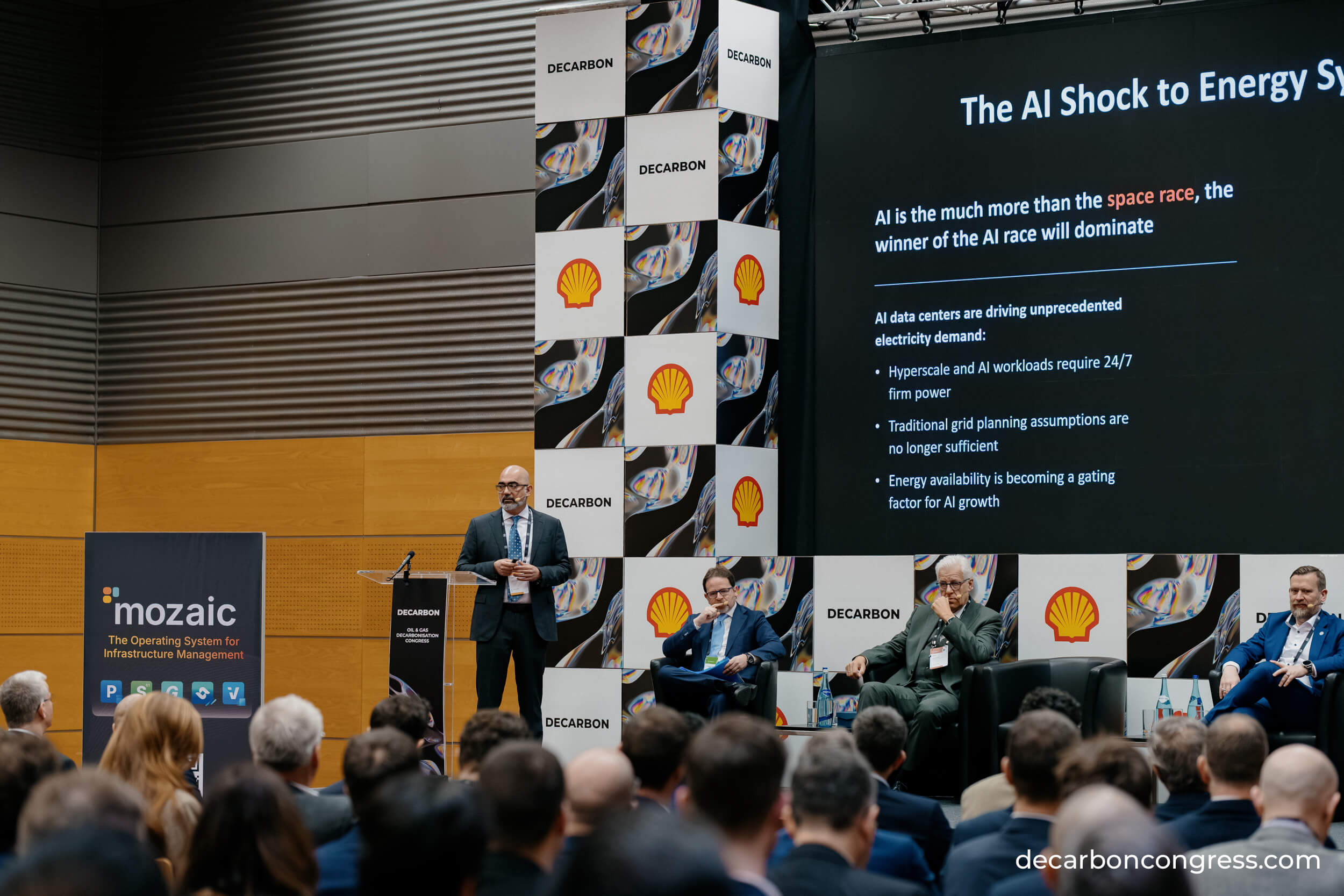
On 9-10 February 2026, industry leaders gathered in Vösendorf, Austria for the Oil and Gas Decarbonisation Congress DECARBON 2026 – one of the key energy transition events in Europe. The Congress brought together oil & gas companies, pipeline operators, refineries, EPCs, technology and service providers, equipment manufacturers and policy representatives to move from ambition to execution on the net zero roadmap.
Across two intensive days, participants examined practical pathways for oil and gas decarbonisation: from CCUS technologies and low carbon hydrogen to digital tools that improve energy efficiency in refineries and pipeline networks. The focus was clear – industrial decarbonisation must be commercially viable, technically realistic and aligned with long-term energy transition strategy.
Among the top companies supporting the Congress this year were Shell (as the Host Sponsor) and Chromalox (Principal Sponsor), as well as Regional Partners: Moeve, Fluor, Gasunie, The International Association of Oil & Gas Producers, Repsol; the Technology Partner – Spiecapag and the Decarbonisation Partner – Germany Trade & Invest.
Business Programme: From Net Zero Roadmap to Oil and Gas Decarbonisation Strategy
The DECARBON 2026 business programme featured 11 sessions and 55 speakers – energy transition experts representing the full oil and gas value chain.
Panels, sessions and roundtables addressed the evolving role of hydrogen, the carbon capture market, industrial impact of regulations, energy efficiency improvements to reduce energy use and more. Rather than abstract commitments, the programme focused on deployment and shared experience in scaling decarbonisation technologies, improving carbon competitiveness and embedding low carbon development into core business models.
Executive Opening Panel: Key Insights into Oil & Gas Decarbonisation
The Congress opened with welcome remarks from Olga Shemberkas (Project Director at BGS Group) followed by Rainer Klöpfer (Country Chair & Managing Director at Shell Austria) and Fredrika Persson (Sales Strategy Lead at Chromalox). Their message was consistent: net zero roadmaps must translate into practical oil and gas decarbonisation strategy.
Then the Executive Opening Panel brought senior leaders together to discuss how Europe’s decarbonisation industry can move forward under regulatory pressure and rising capital constraints.
Rainer Klöpfer described the energy transition as both a technical and societal transformation. He reaffirmed Shell’s ambition to become a net-zero emissions energy business by 2050, positioning integrated gas and LNG as transition fuels that support renewable expansion while reducing emissions. He highlighted the need to decarbonise LNG through low carbon technology and carbon capture, while improving the carbon performance of existing assets.
In Austria, the expansion of Shell Recharge infrastructure and the use of Renewable Diesel (HVO100) were presented as practical examples of low carbon development in mobility and hard-to-electrify sectors.
“Achieving net zero is a shared journey. Shell invites all partners to shape an energy system that is sustainable, inclusive and resilient – because the future of energy is the future of society,” concluded Rainer Klöpfer.

Debates: Is Decarbonisation Worth the Cost?
One of the most dynamic sessions was the live Debate: Is Decarbonisation Worth the Cost? Moderated by Majd Barbari (Business Development Manager at Petrofac), the format was intentionally interactive. Enrico Giglioli (Chief New Initiatives Officer at Saras), Pablo Balado (Project Engineer at Reganosa), Marx Janssens (Policy Advisor at Gas Infrastructure Europe) and Stefano Miriello (EU Deputy Director at The Carbon Capture and Storage Association) challenged each other and the audience on the economics of oil and gas decarbonisation.
The discussion moved beyond slogans. Participants weighed the cost of LNG infrastructure transformation, industrial carbon capture deployment and carbon storage and sequestration projects against regulatory requirements and competitive pressures.
No simple conclusions were offered. Instead, the session reflected the complexity of today’s energy transition investment decisions where decarbonisation must align with affordability, resilience and long-term market positioning.

Live Talk – Building Bankability: Commercial, Contractual and Execution Excellence for Europe’s Low-Carbon Infrastructure
In a focused Live Talk, hosted by Technip Energies, a fundamental question – how do you turn climate ambition into bankable infrastructure? – was addressed.
Opening with the statement, “Ambition is not the constraint – bankability is”, Gianluca Di Lecce (Head of Subcontracting Department UKOC), James Hughes (VP Commercial) and Peter Blumenhofen (Commercial Director Dach Market) examined how commercial structuring and execution models influence final investment decisions.
The speakers emphasised that “Winning projects are those designed for financing from day one” and “Bankability must be embedded early – not engineered later”.
The session linked execution strategy with net zero roadmap planning, showing how CCUS and other decarbonisation technologies require finance-ready design from the outset. Through direct dialogue with participants, the Live Talk demonstrated that large-scale deployment of such projects in Europe depends on contractual clarity, regulatory alignment and strong technology partnerships.

Focus Exhibition: Decarbonisation Technologies in Practice
The Focus Exhibition featured more than 35 stands, representing segments from heat exchanger technology, compressors and turbomachinery to electrical equipment, consultancy and software.
Companies such as Shell, Chromalox, Siemens AG, Miyawaki, INRAG AG and NEUMAN & ESSER Deutschland GmbH & Co KG showcased solutions supporting oil and gas decarbonisation strategy.
“Being at DECARBON 2026 is a fantastic opportunity to really promote and prove how we can add value and support all of the companies driving sustainability for a positive change”, - Max Flannery, Business Development Manager at Chromalox.

Beyond product displays, the exhibition area became a working space for collaboration. Conversations around carbon capture market trends, industrial carbon capture deployment and infrastructure integration continued between sessions, reinforcing the event’s role among Europe’s key oil and gas networking events.
Gala Dinner: Relationships Beyond the Programme
The first evening concluded with the traditional Gala Dinner at Casino Baumgarten, a 19th-century venue known for its Victorian elegance.
Live jazz music, fine cuisine and the BGS Lottery created a relaxed setting where business conversations evolved into long-term connections. Alongside gifts from the organiser, companies including NEUMAN & ESSER Deutschland GmbH & Co KG, INRAG, Shell, Atmio, Oiler.ai, Petro IT and LiveEO contributed prizes ranging from technology gadgets to premium beverages and local souvenirs. Their contributions added a personal touch to the evening. Congratulations to all winners and sincere thanks to the companies that supported the celebration!
B2B Meetings: Where Strategy Turns into Action
Structured networking remained central to DECARBON 2026. Over 180 B2B meetings took place during the Congress, confirming its position among Europe’s most effective oil and gas networking events.
These meetings reflected the broad spectrum of decarbonisation challenges discussed at the Congress. Participants addressed energy efficiency and energy cost optimisation, practical pathways for implementing low-carbon technologies and the selection of solutions that balance emissions reduction with operational feasibility. A strong focus was placed on maintaining infrastructure reliability through collaboration across the value chain, from technology providers to operators, ensuring that decarbonisation strategies support stable, long-term industrial performance rather than isolated technical upgrades.
“I was pleased to attend DECARBON 2026 to get the feeling of what’s happening in our industry, because things have been very dynamic and changing recently. I found out what technologies are enhancing or developing and also networked with colleagues”, - Tim Shire, Process Engineering and Strategy Manager, Major Decarbonisation Projects at EET Fuels, Stanlow Refinery.
The dedicated VIP Meeting Room provided a private setting for high-level negotiations. Special thanks go to C Teleport B.V. for sponsoring this zone and supporting productive dialogue.
Decarbonisation Moving Forward
DECARBON 2026 demonstrated that the decarbonisation industry in Europe is entering a more mature phase. The focus has shifted from discussion to deployment and from ambition to execution. Industrial decarbonisation, low carbon development and carbon capture are no longer peripheral topics – they are shaping long-term competitiveness.
As the energy transition market continues to evolve, platforms like DECARBON remain essential for connecting energy transition experts, accelerating investment decisions and advancing a resilient oil and gas decarbonisation strategy.

“We were very interested in projects that are actually happening on the ground and wanted to have a more intimate dialogue with the industry. So it was a fantastic opportunity for us to engage in those discussions with the project developers, the companies that are trying really to contribute to decarbonisation”, - Maria Karagiannidou-Rosiek, Head of Policy at The International Association of Oil & Gas Producers.
Save the date for the third edition of DECARBON taking place on 15-16 February 2027 in Berlin.
The registration is already open!